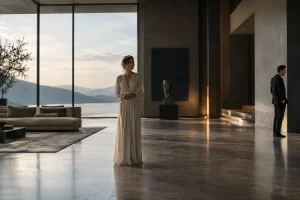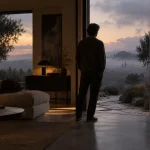
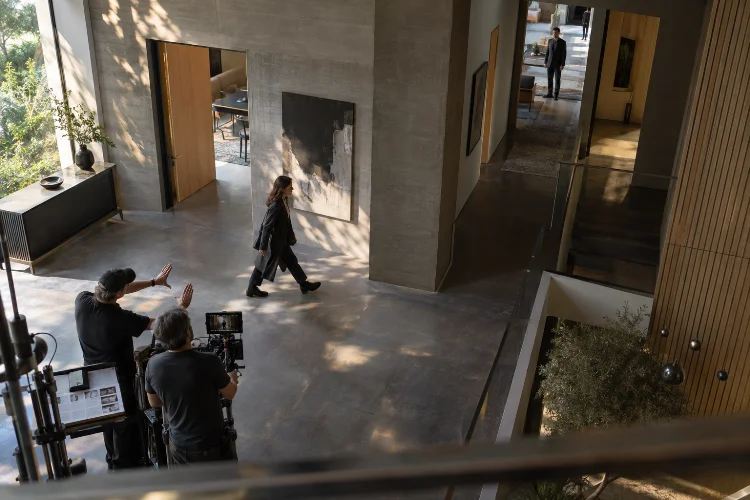
A character runs out of frame to the right. In the next shot, we expect that person to continue moving toward the right. Reverse the direction without explanation, and something suddenly feels wrong – even if viewers cannot explain why.
That invisible sense of orientation is called screen geography.
When directors manipulate screen geography to guide the audience, they are essentially building a mental map inside the viewer’s head. Characters need to appear connected across cuts.
Also Read
Eyelines must suggest believable relationships. Doors, corridors, vehicles, and movement directions need to make enough spatial sense that audiences can concentrate on the story instead of wondering where everyone went.
But great directors do more than preserve geography. They can deliberately distort it.
A filmmaker might keep space perfectly clear during a calm conversation, then suddenly break those rules when a character becomes confused or frightened. The audience experiences that psychological change visually.
Screen geography is therefore not simply a continuity problem. It is a powerful storytelling language for controlling orientation, attention, tension, and emotion.
What Is Screen Geography in Filmmaking?
Screen geography refers to the way physical three-dimensional space is translated into the two-dimensional movie frame.
The audience needs to understand basic relationships: where characters are positioned, which direction they are facing, where they are moving, and how different locations connect.
Film author Kelly Gordon Brine describes screen geography as essential for maintaining clear time and space across shots. Contradictory information about where characters or objects are located can temporarily confuse viewers and distract them from the narrative.
Consider a simple restaurant scene.
One character sits on the left side of the table and another sits on the right. After several close-ups, the audience should still understand that relationship even though the full table is no longer visible.
Good screen geography makes those cuts almost invisible.
The audience stops thinking about camera placement and focuses entirely on the characters.
The 180-Degree Rule Creates a Reliable Mental Map
One of the most famous tools for maintaining screen geography is the 180-degree rule.
Imagine an invisible line connecting two characters. Once the camera establishes one side of that line, subsequent shots usually remain on the same side.
Why?
Because crossing the line can reverse the characters’ screen positions.
Someone previously looking screen-right may suddenly appear to look screen-left. Two people who seemed to face each other can suddenly look as though they are facing the same direction.
Adobe describes the 180-degree rule as a foundation of spatial continuity because it helps preserve where characters appear relative to one another across cuts.
The rule is not a law.
Directors break it regularly.
The important difference is whether the audience becomes confused accidentally or whether that confusion serves the scene.
A deliberate axis change can communicate that relationships have shifted. A careless one simply makes geography harder to understand.
Screen Direction Makes Movement Feel Continuous
Direction is equally important when characters travel through a scene.
If a hero begins running from left to right, repeatedly maintaining that direction across multiple locations can create the feeling of continuous forward progress.
Suppose a character leaves a house moving screen-right.
The next shot shows their car travelling right. Then they walk through an office corridor in the same direction.
The locations have changed, but directional continuity connects the journey.
StudioBinder notes that reversing movement between shots without establishing a reason can feel jarring because viewers unconsciously track screen direction.
Directors can manipulate this expectation.
A character who has spent the film travelling consistently left-to-right could suddenly move in the opposite direction after deciding to return home. The reversal can visually reinforce the narrative change.
Direction therefore becomes more than continunity.
It can become symbolism.
Eyelines Tell Us Where Invisible Characters and Objects Exist
An actor does not need to share the frame with something for the audience to understand where it is.
Eyelines can create invisible geography.
Imagine a woman looking upward and slightly screen-left.
Cut to a second-floor window.
Even without showing both in one shot, viewers automatically connect her gaze with that window.
This is called an eyeline match.
Adobe explains that maintaining eyeline relationships helps audiences understand where characters, objects, and points of interest exist relative to one another.
The technique becomes particularly useful during conversations.
If Character A looks screen-right, Character B will normally look screen-left. Their opposite eyelines make them appear to face one another even when their close-ups were filmed separately.
Directors can also weaponize a broken eyeline.
Imagine a character hearing a voice and looking toward screen-right, but the next shot reveals nothing there.
That empty space immediately becomes suspicious.
The geography itself begins generating tension.
Establishing Shots Give the Audience a Spatial Blueprint
Before manipulating space, directors often establish it.
A wide shot can function like a blueprint.
It shows where the door is, where characters are sitting, where the staircase leads, and how important objects relate to one another.
Once audiences understand that layout, the filmmaker can move into tighter coverage without constantly reminding them where everything is.
This is especially important in action filmmaking.
Imagine a chase involving three characters, two exits, a staircase, and a moving vehicle. If the geography has been clearly established, viewers can anticipate danger.
They know the villain is approaching one doorway while the hero is unknowingly moving toward it from the opposite side.
Without spatial clarity, the sequence becomes noise.
With clarity, geography creates suspense.
That is why action scenes do not necessarily become more exciting simply by adding faster editing. Audiences need enough orientaion to understand what is at risk.
Foreground and Background Can Create Multiple Geographic Layers
Screen geography is not only about left and right.
Depth matters too.
Directors can position one character close to the camera while another operates far in the background. Instead of cutting between them, the filmmaker allows both spatial layers to exist simultaneously.
This technique can give the audience knowledge a character does not have.
Imagine someone searching a dark room in the foreground while a door quietly opens behind them.
The audience sees both actions.
The character sees only one.
Suddenly the physical distance between foreground and background becomes a suspense mechanism.
Discussion of Steven Spielberg’s visual staging has frequently highlighted his use of deep-space compositions, where action can develop simultaneously across different planes of the image.
This approach also gives viewers some freedom.
Rather than forcing attention through a close-up every few seconds, the director creates a readable enviroment and lets us notice relationships inside it.
Entrances and Exits Help Connect Separate Shots
Something as simple as choosing where a character enters or leaves the frame can maintain geographic logic.
Imagine Character A exits a room through a door on screen-right.
If the next shot shows them entering the hallway from screen-left and continuing rightward, the transition feels natural.
The audience mentally connects both spaces.
But reverse the entrance without explanation and the character may appear to have turned around.
These directional relationships become especially important when scenes involve multiple rooms or complicated architecture.
Doors are essentially geographic editing devices.
A director can use one doorway to connect spaces, separate characters, hide information, or create anticipation.
Alfred Hitchcock’s Rear Window demonstrates how powerful clear spatial organization can become. Much of the film’s suspense depends on the audience learning the layout of apartments across a courtyard and understanding where events occur relative to protagonist L.B. Jefferies.
Scholarship examining the film has emphasized the importance of its windows, rooms, architectural boundaries, and carefully organized spaces.
Once Hitchcock teaches us the map, he can create suspense simply by showing movement within it.
Directors Can Break Geography to Make Us Feel Lost
Clear geography is useful, but confusion can also be useful.
The key is intention.
During a nightmare, fight, panic attack, or psychologically unstable sequence, a director might deliberately cross the 180-degree line, reverse movement, remove establishing shots, or use disconnected close-ups.
Suddenly the audience cannot construct a reliable map.
That discomfort may place us closer to the character’s experience.
Continuity editing normally aims to keep viewers grounded in time and space, while discontinuity techniques can intentionally break that smoothness for expressive purposes.
Imagine a character peacefully walking through an apartment early in a thriller.
The director shows the hallway, bedroom, kitchen, and exits clearly.
Later, during an attack, those same spaces are filmed through extreme close-ups, abrupt cuts, reversed angles, and obstructed compositions.
The architecture has not changed.
Our ability to understand it has.
That visual disruption makes familiar surroundings feel dangerous.
Screen Geography Can Control Power Between Characters
Spatial relationships can also communicate power.
If one character repeatedly occupies screen-left while another controls screen-right, audiences gradually become familiar with that arrangement.
Swapping their positions during a major confrontation can make the change feel surprisingly significant.
The same applies to distance.
A dominant character may control the foreground while someone weaker remains farther away. As the weaker character gains confidence, they may gradually move deeper into the dominant person’s space.
Blocking and geography work together.
A filmmaker may even use a physical boundary – a desk, doorway, window, staircase, or corridor – to separate competing characters.
When someone finally crosses that boundary, the action carries meaning because the audience already understands the spatial rule.
Research on cinematic space increasingly emphasizes that filmmakers can manipulate spatial relationships quite dramatically while audiences still construct a coherent fictional world, provided essential spatial connections remain readable.
In other words, movie geography does not need to be literally realistic.
It needs to be narratively convincing.
Great Screen Geography Often Goes Unnoticed
The irony is that successful screen geography usually attracts very little attention.
When it works, audiences simply understand the scene.
They know who is chasing whom, where danger is coming from, which character is looking at another, and how people move from one location to the next.
That invisible clarity gives directors freedom.
Once the audience trusts the geography, the filmmaker can manipulate expectations. A character can disappear beyond one edge of the frame. An empty doorway can become threatening. A sudden directional reversal can feel emotionally wrong before viewers consciously understand why.
This is why learning screen geography is not merely about avoiding continuity mistakes.
It is about controlling what the audience expects to see next.
And expectation is one of the foundations of cinematic storytelling.
Screen geography quietly shapes almost every scene we watch.
Directors use screen direction, the 180-degree rule, eyelines, establishing shots, entrances, exits, foreground, background, and blocking to build a mental map for the audience.
Once that map is established, they can preserve it for clarity or deliberately damage it to create tension, confusion, or emotional change.
The best examples rarely call attention to the technique. We simply feel that characters are moving forward, drifting apart, approaching danger, or becoming trapped.
Next time you watch a movie, pay attention to which direction characters travel and where they appear after every cut.
Try building the scene’s map in your head. You may start noticing that directors are guiding you through imaginary space with far more precision than it first appears.