Sometimes the scariest thing in a movie is not what the director shows. It is what the director refuses to show.
A door remains closed. A character knows something but will not explain it. We hear movement somewhere outside the frame, yet the camera stays exactly where it is. Instead of giving audiences immediate answers, the film creates an information gap and makes us wait.
That is the basic power of narrative withholding in cinematic suspense.
Also Read
Suspense depends heavily on controlling who knows what, when they learn it, and how long the audience must remain uncertain.
A director can reveal danger before the character notices it, hide the identity of a threat, delay an explanation, or show only the consequences of something happening off-screen.
Alfred Hitchcock famously built scenes around carefully directing audience attention. In a 1937 essay, he explained how camera placement and editing could gradually emphasize individual details and draw viewers psychologically into a dangerous situation.
Great suspense therefore is not simply about hiding information.
It is about hiding the right information for the right amount of time.
Withholding Creates an Information Gap
Every suspense sequence contains questions.
Who is behind the door? What is inside the suitcase? Does the detective know the suspect is lying? Will the killer discover someone hiding upstairs?
The filmmaker does not immediately answer those questions.
Instead, the audience receives enough information to understand that an answer matters.
That difference is crucial.
If viewers know nothing, they may simply become confused. If they know everything, there may be nothing left to anticipate.
Narrative withholding works in the space between those extremes.
David Bordwell and Kristin Thompson’s analysis of Hitchcock’s The Man Who Knew Too Much, reproduced by Criterion, describes how mystery narratives delay important story events and manipulate the range of information available to viewers.
Hitchcock’s film eventually changes from asking what the conspirators are planning to asking whether their revealed assassination plan will succeed.
The information changes.
The suspense continues.
Suspense and Surprise Use Information Differently
Surprise and suspense are often treated as the same thing, but they create very different experiences.
Imagine two people talking in a café.
Suddenly, a bomb explodes beneath their table.
That produces surprise.
Now imagine the movie first shows the audience the bomb. The characters continue discussing dinner plans while a timer quietly approaches zero.
Nothing has exploded yet, but the entire conversation becomes stressful.
That is suspense through dramatic irony: the audience knows something the characters do not.
Filmmaker Hany Abu-Assad described the same Hitchcock principle when discussing his film Omar. By showing viewers a military jeep approaching a character from behind, the scene creates tension because the audience recognizes danger before the character does.
Narrative withholding does not therefore always mean hiding information from audiences.
Sometimes filmmakers reveal the threat but withhold the outcome.
The unanswered question becomes, “When will the character discover what we already know?”
Off-Screen Space Lets the Audience Imagine the Threat
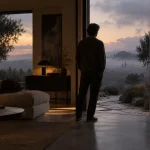
Cinema has an unusual advantage: viewers know the world continues beyond the edges of the frame.
Directors can exploit that.
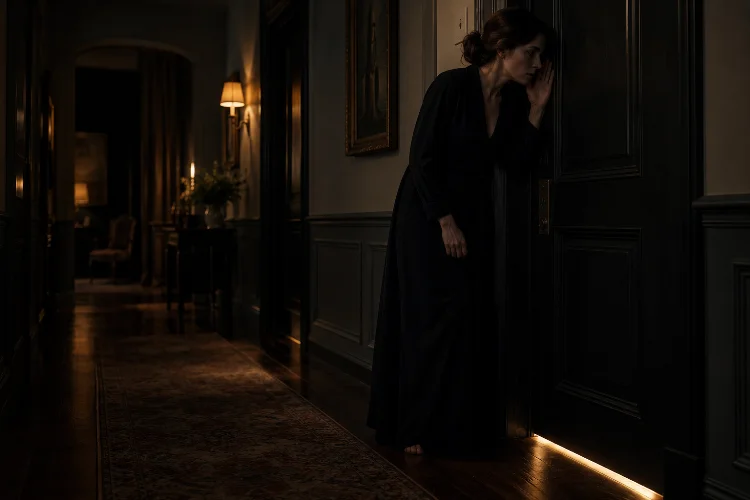
A character hears something upstairs, but the camera stays downstairs.
Someone walks toward a dark doorway while we cannot see what is inside.
A creature attacks, but we see only its shadow or the reaction of its victim.
The audience begins filling the invisible space with possibilities.
Steven Spielberg’s Jaws famously benefited from keeping its shark off-screen for significant stretches. Roger Ebert observed that Spielberg frequently presents the results of the shark’s actions instead of the animal itself, allowing anticipaton to become a major source of tension.
Alien uses a related strategy.
Ebert noted that the creature keeps changing during the movie, preventing audiences from becoming completely familiar with what it looks like or what it can do. Uncertainty preserves its threatening quality.
Sometimes the imagination creates a more frightening monster than a full reveal could.
Restricted Point of View Makes Uncertainty Personal
Suspense becomes particularly intense when audiences are trapped inside a character’s limited perspective.
If the protagonist does not know where the threat is, we may not know either.
The camera can refuse to provide an establishing shot. Editing can restrict us to one room. A character can hear something that remains visually unexplained.
This makes uncertainty subjective.
We are not simply waiting for information about the story.
We are experiencing the character’s lack of information.
The Silence of the Lambs often stays close to Clarice Starling’s perspective. Criterion notes how Jonathan Demme sometimes restricts violent imagery to what Clarice sees, making her point of view central to how audiences encounter important information.
Restricted narration also creates vulnerability.
An omniscient audience can see every danger.
A limited audience has to enter the dark room with the protagonist.
Delayed Explanation Can Be More Powerful Than Delayed Action
Filmmakers do not have to hide the event itself.
Sometimes they show what happened while withholding why it happened.
That creates a different form of suspense.
Brian De Palma’s Sisters offers a useful example. Criterion’s analysis describes how De Palma gives audiences significant information while delaying the explanations that would make that information fully understandable.
The viewer sees evidence and consequences while the deeper reasons remain uncertain.
This technique works especially well in mysteries and psychological thrillers.
A film might open with someone burying a suitcase.
We already know the action.
The suspense comes from questions surrounding it.
What is inside? Why is the person frightened? Who are they hiding it from?
Each later scene can provide one additional piece without resolving everything.
This creates a chain of curiosity.
One answer generates another question.
Reaction Shots Can Withhold the Object of Fear
Sometimes filmmakers show the reaction before showing what caused it.
A character opens a bedroom door.
Their expression suddenly changes.
Cut.
The director can now delay revealing what they saw.
This technique transfers attention from an external object to emotional anticipation.
The audience begins imagining possibilities from the actor’s reaction.
The more extreme the expression, the larger those possibilities become.
Hitchcock wrote about constructing psychological tension by breaking action into significant details and forcing the audience to focus on each detail in sequence.
A reaction shot can therefore function like a promise.
Something important exists outside our current knowledge.
The filmmaker simply refuses to let us see it yet.
That delay might last two seconds.
Or it might last half the movie.
Long Takes Can Make Withholding Uncomfortable
Editing can hide information through cuts.
But refusing to cut can be equally suspenseful.
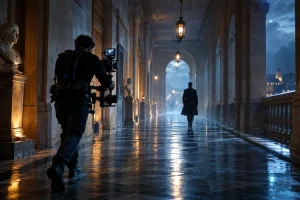
Imagine a character walking slowly through an empty hallway.
A conventional edit could show the next room and reassure us that nobody is there.
Instead, the director remains behind the character.
The unknown space ahead stays unknown.
Every additional second increases discomfort.
Criterion’s discussion of Masahiro Shinoda’s Samurai Spy notes how long takes can intensify anticipation when filmmakers deliberately prevent viewers from receiving information that an edit might otherwise reveal.
This explains why duration itself can become a suspense tool.
The audience expects something to happen.
The director knows that expectation exists.
Then the movie waits.
And waits.
The longer nothing happens, the more significant every tiny sound or movement becomes.
Dramatic Irony Lets Ordinary Actions Become Dangerous
Suspense does not require dark corridors or murderers.
Information imbalance can make completely ordinary behaviour stressful.
Suppose the audience knows a character’s husband is hiding inside the bedroom.
His wife enters the apartment with another person.
She makes coffee.
She discusses work.
She walks slowly toward the bedroom door.
Every normal action becomes suspenseful because the audience understands its possible consequences.
StudioBinder describes dramatic irony as a situation in which viewers possess important information that a character lacks, creating tension because we can anticipate dangers or consequences the character cannot.
Rear Window uses this principle brilliantly.
Roger Ebert highlighted scenes where Jeff watches Lisa enter dangerous spaces while both he and the audience can see threats developing that she cannot immediately detect. His physical inability to intervene makes the information imbalance even more painful.
The suspense comes from knowing too much and being unable to help.
Good Withholding Gives Clues Instead of Nothing
There is an important difference between suspenseful withholding and simply refusing to explain the story.
Good withholding feeds audiences enough clues to keep them engaged.
We may not know the answer, but we should know the question.
A mysterious character might behave strangely. An object keeps appearing. Someone changes the subject whenever one particular name is mentioned.
Each clue tells viewers that the missing information is relevent.
Without these signals, mystery can become frustration.
Think of suspense as controlled information flow.
Reveal too much and tension disappears.
Reveal too little and the audience stops understanding why anything matters.
The filmmaker constantly adjusts that balance.
This is why effective suspense sequences often feel strangely interactive.
The audience is always predicting.
We imagine what might be behind the curtain, underneath the floor, inside someone’s memory, or waiting after the next cut.
The film gives us just enough material to construct possibilities but refuses to confirm one too soon.
Reveals Need Timing to Create Maximum Impact
Eventually, most withheld information needs some form of payoff.
Timing that reveal is critical.
Reveal a monster too early and it may become familiar.
Reveal the villain’s plan too late and the audience may not have enough time to worry about it.
Reveal the truth exactly when another character is about to make a dangerous decision, and the information can transform the entire scene.
This is why suspense is closely related to narrative rhythm.
A director decides when viewers receive information, how long they sit with it, and whether characters receive the same information simultaneously.
Sometimes audience and character learn the truth together.
Sometimes viewers learn it first.
Sometimes the character knows more than we do.
Each arrangement produces a seperate emotional effect.
The suspense does not exist only inside the hidden information.
It exists in the timing of its release.
Narrative withholding creates cinematic suspense because audiences naturally want to complete missing information.
Filmmakers can hide threats in off-screen space, restrict us to a character’s perspective, delay explanations, reveal dangers before characters notice them, or simply make us wait longer than feels comfortable.
The strongest suspense does not withhold everything. It carefully controls the balance between knowledge and uncertainty.
Movies such as Jaws, Alien, Rear Window, and Hitchcock’s thrillers demonstrate that what audiences anticipate can be more powerful than what they immediately see.
Next time a film makes you tense before anything actually happens, notice what information is missing. Ask what you know, what the character knows, and what the director refuses to reveal. The suspense is often hiding inside that gap.